
If you’re preparing to sell a home with a dated kitchen, you may assume a major renovation needs to happen before the For Sale sign goes up.
Often, it doesn’t.
Kitchens matter to buyers, but that doesn’t mean every dated kitchen needs $30,000, $50,000—or more—of work before a home can sell successfully. In some cases, renovating shortly before selling can mean spending money on finishes the next owner wouldn’t have chosen anyway.
This is especially true in vintage and character homes, where older cabinetry, original details, unusual layouts, or finishes from another era may simply be part of the home’s story.
As a Realtor® and Certified Home Stager serving Petersham and Central Massachusetts, I would rather help a seller identify the improvements buyers are most likely to notice than automatically recommend a major renovation.
Before you start tearing out cabinets, consider these ten strategies.
1. Make Sure Everything Works in Your Dated Kitchen
Start with function before appearance. A dated kitchen that is clean and functional presents very differently from one with dripping faucets, loose cabinet doors, broken hardware, burned-out lights, or appliances that don’t work properly.
Addressing small maintenance issues can often give sellers a much better return than beginning an unnecessary cosmetic renovation.
2. Deep Clean Before You Upgrade Your Dated Kitchen
Older doesn’t have to mean dirty or neglected.
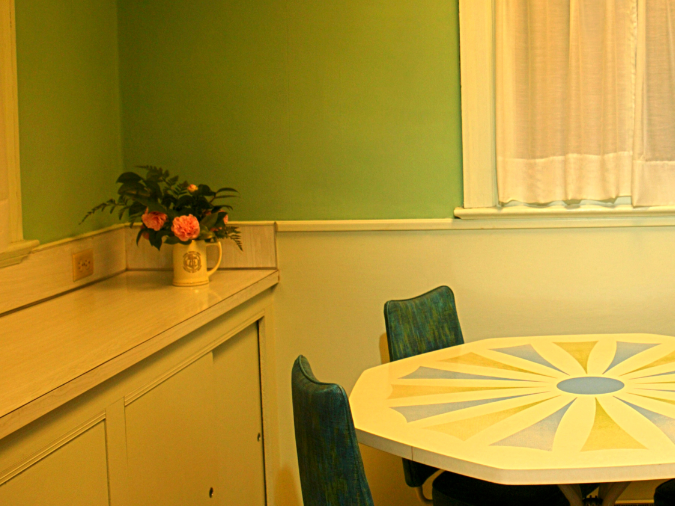
Clean cabinet fronts, degrease the backsplash and range area, scrub grout, clean appliances thoroughly, polish hardware, and pay particular attention to floors and windows.
Buyers are much more forgiving of an older kitchen that feels exceptionally clean and well cared for.
3. Declutter the Counters
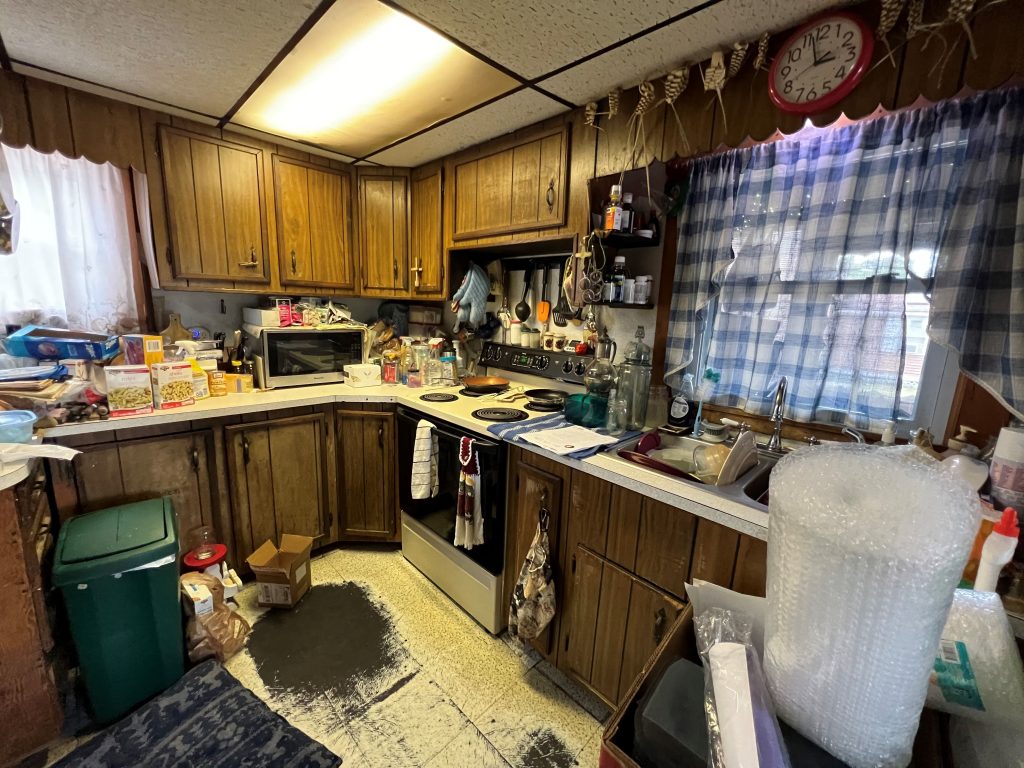
Counter space is one of the first things buyers evaluate in a kitchen. Too many appliances, dish racks, papers, food containers, and decorative items can make even a reasonably sized kitchen feel short on workspace.
Keep only a few intentional items out for photography and showings.
4. Don’t Automatically Paint Original Wood Cabinets
Painting cabinetry can sometimes transform a kitchen—but it shouldn’t be an automatic recommendation.
In an older or character home, quality wood cabinetry may actually contribute warmth and architectural interest. Once original wood is painted, reversing that decision can be difficult and expensive.
Before changing it, consider the quality, condition, age, and style of the cabinetry as well as the rest of the home.
Not Sure What’s Actually Worth Fixing in Your Dated Kitchen?
Before starting your pre-sale project list, watch my video on What Not to Fix Before Selling Your House. I break down the projects sellers often assume they need—and where that money may be better spent.
5. Make Small Cosmetic Changes Strategically
If the kitchen needs a lift, smaller changes may be enough. Updated hardware, a simple light fixture, fresh paint, new switch plates, or a modern faucet can sometimes make the room feel considerably more current without committing to a full renovation.
The goal isn’t to disguise the kitchen’s age. It’s to remove unnecessary distractions.
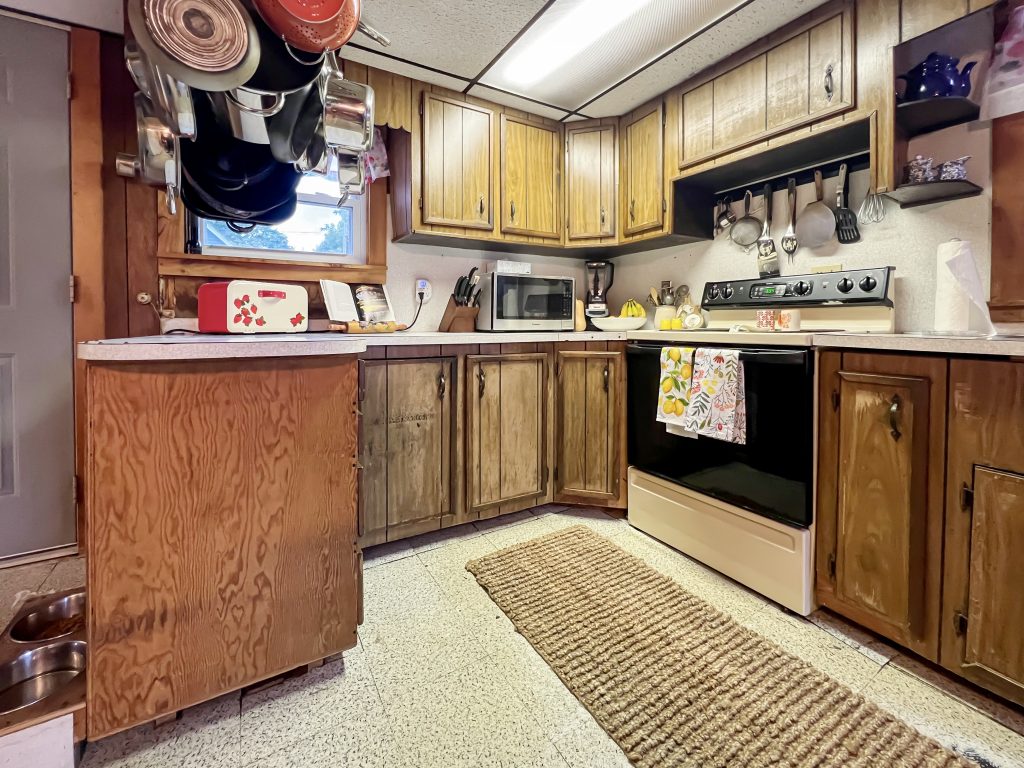
6. Stage Your Dated Kitchen Simply
Kitchen staging should help buyers notice the room—not the stuff in it.
A simple bowl, cutting board, cookbook, small plant, or neatly folded towel may be all you need. Clear visual clutter from counters, refrigerator doors, sinks, and open shelving.
In a vintage kitchen, styling can also help bridge older finishes with today’s aesthetic without pretending the kitchen is something it isn’t.
7. Let in as Much Light as Possible
Open blinds and curtains, clean the windows, replace burned-out bulbs, and make sure every fixture works.
Good photography depends heavily on light, and a bright kitchen tends to feel cleaner, larger, and more inviting—even when its finishes aren’t brand new.
8. Invest in Professional Photography, Not Just Renovations
If you have a limited pre-sale budget, presentation matters.
Professional photography, thoughtful staging, and careful preparation can change the way buyers perceive an older kitchen without changing the kitchen itself.
The goal is to show buyers how the room fits into the larger story of the home rather than allowing one dated finish to dominate their first impression.
9. Price the Home for What It Is
Staging and marketing can’t replace appropriate pricing.
If comparable homes have fully renovated kitchens and yours doesn’t, that difference should be considered when positioning the property. Trying to achieve renovated-home pricing without the renovation can lead to longer market time and eventually make buyers wonder what’s wrong with the property.
A well-prepared home priced appropriately can be far more compelling than an overpriced home with a few rushed cosmetic upgrades.
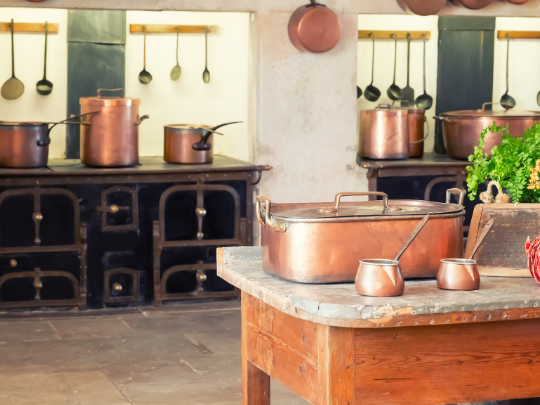
10. Sell the Home’s Story—not an Apology for Its Kitchen
One of the biggest mistakes sellers make is treating every older feature as something they need to apologize for.
A home doesn’t need to be brand new to be desirable.
Buyers may be drawn to original cabinetry, craftsmanship, vintage details, a farmhouse layout, or simply the opportunity to personalize the kitchen over time.
Good real estate marketing identifies the buyers most likely to appreciate what the home already offers while helping them envision what it could become.
Before You Renovate, Make a Plan
If you’re thinking about selling an older home, don’t start spending money simply because something looks dated.
Some improvements can absolutely help a home sell. Others cost thousands of dollars without meaningfully changing what a buyer will pay.
My approach is to look at the whole property first—condition, competition, likely buyer, pricing, staging, and the features worth preserving—and then determine where your time and money are most likely to make a difference.
Every detail matters. Every home tells a story.
If you’re preparing to sell a vintage, historic, or character home in Central Massachusetts, download my Historic Home Seller Guide for more guidance on preparing your home without erasing the character that makes it special.